
Utah Freeze-Thaw Cycle & Concrete: Holladay Guide
Holladay homeowners spend thousands on concrete driveways and patios that develop surface scaling and cracking within a decade — not because concrete is a bad material, but because much of the concrete installed in Salt Lake County was never specified correctly for this climate. The freeze-thaw cycle is the primary cause of premature concrete failure in Holladay, and it’s entirely preventable with the right mix design.
In this post, we explain exactly how freeze-thaw cycling damages concrete, what air entrainment is and why it’s essential in Holladay’s climate, how to identify freeze-thaw damage on your existing concrete, and what specifications to require from any contractor doing concrete work on your Holladay property.
Concrete Built for Utah's Freeze-Thaw Climate
Holladay Concrete Pros specifies the correct air-entrained mix for every exterior project — free estimate included.
Why Holladay’s Freeze-Thaw Count Is Exceptional
The freeze-thaw cycle count depends on how many times temperatures cross the 32°F threshold — both below and above — in any given year. Holladay’s 4,465-foot elevation on the Wasatch Front produces over 100 such crossings annually. Compare this to Denver (approximately 70–80 cycles), Phoenix (fewer than 10), or Minneapolis (roughly 80 cycles) and you see that Salt Lake County concrete faces genuinely demanding conditions.
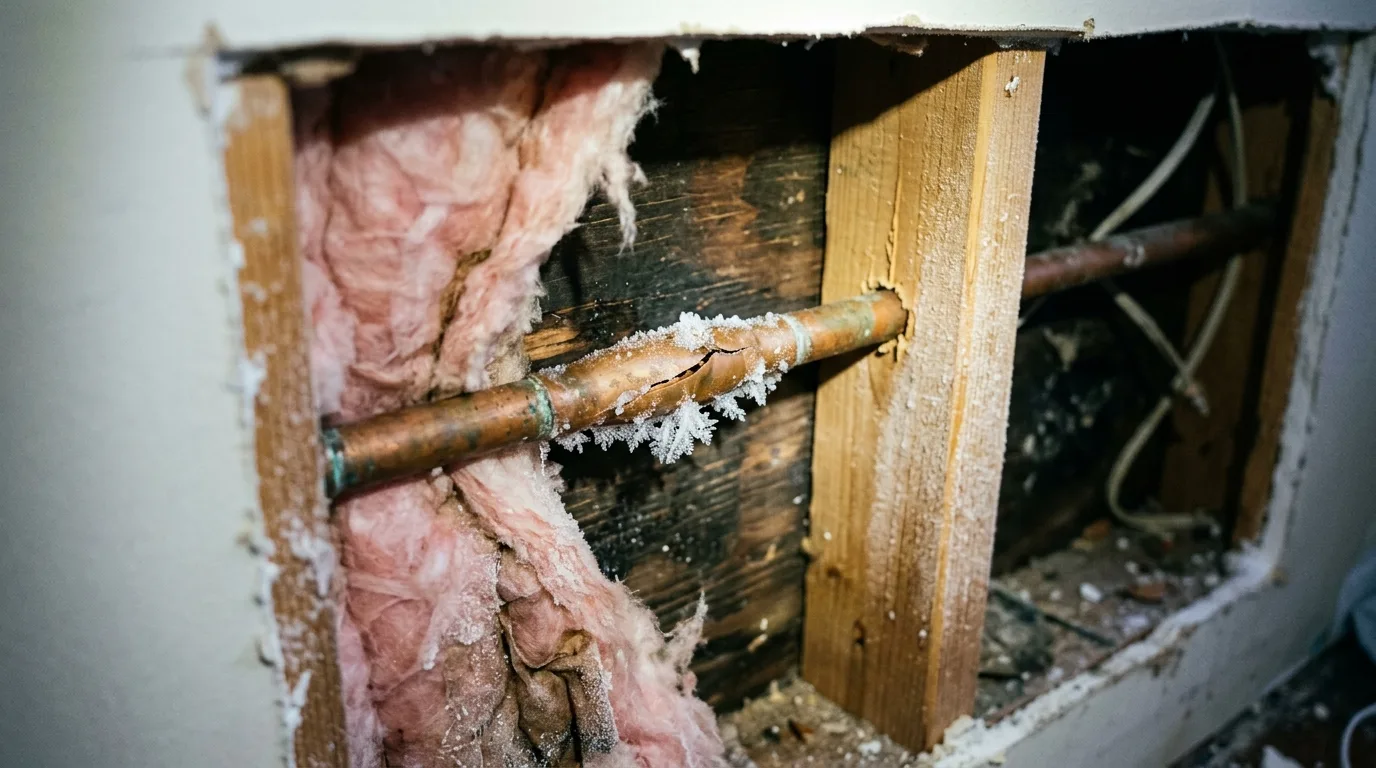
The physics of concrete damage is straightforward: water occupies all available pore space and cracks in concrete. When that water freezes, it expands by approximately 9% in volume. Concrete cannot accommodate this expansion elastically — it transmits the force directly to the surrounding material. Without air entrainment providing relief, the force eventually exceeds the tensile strength of the concrete matrix, producing cracks and surface delamination. Multiply this by 100+ cycles annually for 10–20 years and the cumulative damage is significant.
Types of Freeze-Thaw Damage Patterns
Surface scaling: The most common visible freeze-thaw damage. The concrete surface peels away in thin flakes or sheets, exposing aggregate beneath. Scaling typically appears first in the winter immediately following the first significant freeze if concrete was improperly mixed or inadequately sealed. Once scaling begins on unsealed, non-air-entrained concrete, it accelerates each winter.
D-cracking: A distinctive pattern of cracks running parallel to joints and edges — so named because the cracks trace D shapes around the joint. D-cracking indicates that aggregate particles within the concrete are absorbing water and freeze-thaw cycling, causing micro-cracking in the cement paste around each aggregate piece. This is a mix design issue requiring replacement rather than surface repair.
Pop-outs: Individual aggregate particles at or near the surface absorb water, freeze, and expand, creating a conical void when they fracture. Isolated pop-outs are cosmetic; widespread pop-outs indicate a systemic aggregate or mix design problem.
Through-slab cracking: Freeze-thaw cycling is rarely the sole cause of through-slab cracking — soil movement, inadequate thickness, or missing control joints usually contribute — but repeated freeze-thaw cycling opens and widens existing cracks each winter through the water infiltration mechanism.
Practical Uses for Understanding Your Concrete’s Condition
- Assess your existing concrete: If your driveway or patio is scaling, look closely at the pattern. Uniform surface scaling typically indicates a mix design issue (no air entrainment) or sealer failure. Localized scaling near a downspout or drain suggests a drainage point where water concentrates before freezing.
- Evaluate contractor proposals: Ask every concrete contractor bidding on your project to specify the PSI rating and air content of their proposed mix. The correct answer for Holladay is 4000–5000 PSI with 4–6% air entrainment. A contractor who cannot answer this question or who proposes a standard 3000 PSI non-air-entrained mix is not building to Utah climate standards.
- Understand sealing requirements: Proper concrete sealing blocks moisture penetration — the essential first step in freeze-thaw damage prevention. Concrete in Holladay should be sealed every 3–5 years with a penetrating sealer. If your concrete was last sealed more than 5 years ago, there’s a good chance moisture is freely infiltrating the surface.
- Plan for de-icer avoidance: Chloride-based de-icing salts (sodium chloride, calcium chloride, magnesium chloride) directly damage concrete through chemical mechanisms in addition to freeze-thaw. Salt depresses the freezing point of surface water, causing more frequent freeze-thaw cycles at the concrete surface. Sand is the appropriate traction material for Holladay driveways and walkways.
- Schedule repairs before winter: Concrete with existing open cracks should be sealed before November to prevent the first winter from widening damage. Spring and fall are the best repair windows in Holladay, but pre-winter crack filling is worth prioritizing if damage has developed mid-season.
Is Your Holladay Concrete Freeze-Thaw Ready?
Call Holladay Concrete Pros for a free assessment — we'll evaluate your existing concrete and advise on protection or replacement options.
How Air Entrainment Solves the Freeze-Thaw Problem
Air entrainment introduces billions of microscopic air bubbles uniformly distributed throughout the concrete mix. These bubbles — typically 0.001 to 0.04 inches in diameter — serve as pressure relief valves for freeze-thaw expansion. When water in the concrete pores freezes and expands, the expansion force pushes water into the adjacent air bubbles rather than cracking the surrounding concrete matrix.
The specification for exterior concrete in Holladay is 4–6% air content (by volume of concrete) for 4000–5000 PSI mixes. This is not the same as voids from poor consolidation — air-entrained concrete achieves this air content through chemical admixtures added at the ready-mix plant, producing uniformly distributed microscopic bubbles rather than larger random voids. Properly air-entrained concrete looks no different from standard concrete but has dramatically superior freeze-thaw durability.
The tradeoff: air entrainment reduces concrete strength slightly compared to the same mix without air entrainment. This is why the specification increases to 4000–5000 PSI for Holladay projects — the higher strength compensates for the air content reduction. A contractor who proposes 3000 PSI non-air-entrained concrete for a Holladay driveway is giving you a cheaper mix that will fail faster in our climate.
Sealing as the First Defense
Even properly air-entrained concrete benefits significantly from concrete sealing in Holladay’s climate. Penetrating sealers — silane, siloxane, or silane-siloxane blends — penetrate the concrete surface and chemically react to create a hydrophobic barrier that repels water infiltration. This reduces the moisture available to freeze-thaw cycle within the concrete from the outside.
For existing concrete that was not air-entrained at installation, sealing is the most practical available protection. It won’t undo the absence of air entrainment in the mix, but it dramatically slows the rate at which moisture reaches the interior of the slab where freeze-thaw damage occurs. In the Olympus Cove neighborhood, many older driveways that have been consistently sealed show significantly less freeze-thaw damage than unsealed driveways of similar age in comparable soil conditions.
Cost Factors: Proper Mix vs. Repair Costs
The cost differential between properly air-entrained concrete and standard non-air-entrained concrete is approximately $10–$30 per cubic yard — perhaps $200–$600 on a typical driveway project. The cost of freeze-thaw damage — resurfacing at $1,500–$4,000, or full replacement at $6,000–$12,000 — dwarfs this upfront differential. This is one of the clearest cost-benefit cases in residential concrete: the right specification is a fraction of the cost of repairing or replacing a surface that was incorrectly specified.
Frequently Asked Questions
How do I know if my Holladay concrete was air-entrained when installed?
The only definitive way to know for certain is to have a concrete core tested — but this is rarely practical for homeowners. A strong practical indicator is the surface condition after 10+ winters: properly air-entrained concrete in Holladay rarely shows significant surface scaling before 20 years with any reasonable maintenance. If your concrete is 10–15 years old and already showing substantial surface scaling, non-air-entrained mix is a likely factor.
Does air-entrained concrete look different from regular concrete?
No — the entrained air bubbles are microscopic (too small to see) and uniformly distributed, so the finished surface looks identical to standard concrete. The specification is verified by slump testing at the ready-mix plant, not visually. This is why asking for the concrete spec in writing is important — you cannot verify air content visually on the finished surface.
How often should I seal concrete in Holladay to prevent freeze-thaw damage?
Seal exterior concrete in Holladay every 3–5 years with a penetrating silane-siloxane sealer. Penetrating sealers outperform film-forming sealers in our climate because they allow vapor transmission, preventing moisture from being trapped beneath the sealer where it can freeze. If your concrete is unsealed and you can see open cracks, seal as soon as possible in spring or fall — before the next winter cycle accelerates existing damage.
Protect Your Holladay Concrete from Freeze-Thaw Damage
Call Holladay Concrete Pros at (888) 376-0955 — new installations built to the correct spec, existing concrete assessed honestly.
Related: